
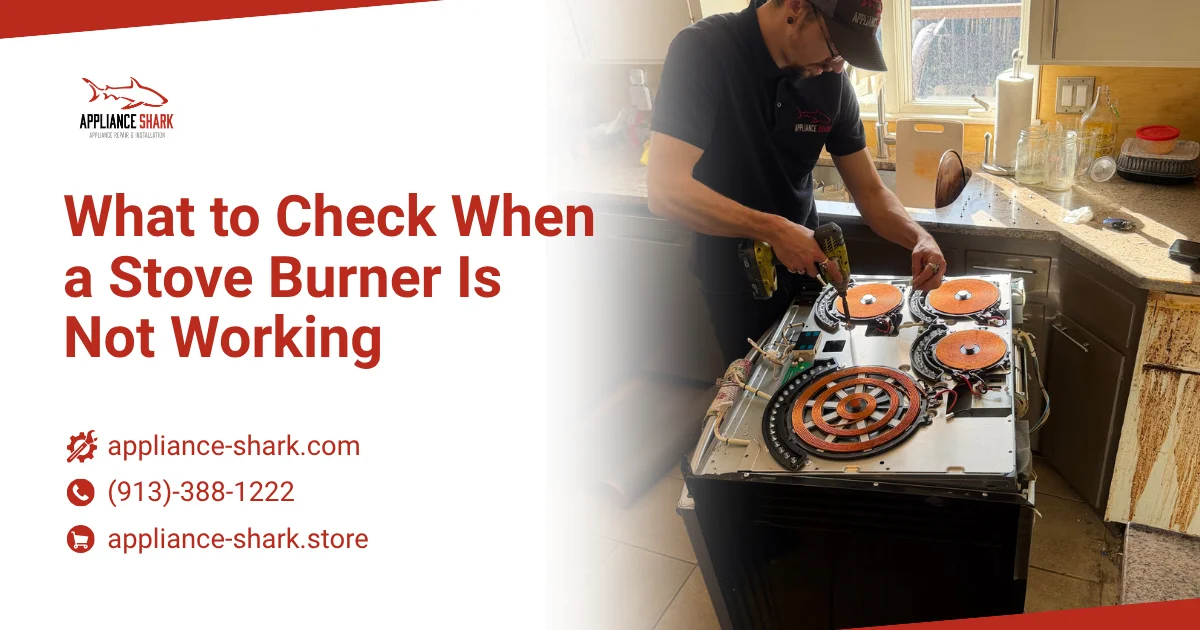
What to Check When a Stove Burner Is Not Working in Roeland Park, KS
A stove burner not working is most often caused by a failed heating coil, a faulty igniter on gas models, a worn burner switch, or a loose electrical connection. For anyone relying on a specific burner for daily cooking, this issue can disrupt routine meal preparation and raise questions about whether a simple part replacement will resolve it. Understanding the most likely causes can help clarify what to expect before scheduling a repair.
This guide walks through the common reasons behind a stove burner not working, how related issues like electric cooktop not heating or a gas stove won’t ignite situation might connect, and when replacing the entire range becomes a more practical consideration. Working through the likely causes by burner type can help narrow down the issue more efficiently.
Key Takeaways
- A stove burner not working is commonly linked to a failed electric coil, a faulty gas igniter, or a worn burner switch.
- Electric cooktop not heating on smooth-top ranges often points to a different set of components than traditional coil burners.
- A gas stove won’t ignite situation typically involves the igniter or gas supply rather than the burner grate or knob itself.
- Some causes, like a loose coil connection, are simple for homeowners to check, while others require professional diagnosis.
- The age of the range and the number of affected burners help determine whether repair or full replacement makes more sense.
Electric Coil Burner Issues
On traditional electric ranges, each burner is a removable coil that plugs into a receptacle beneath the cooktop surface. A stove burner not working on this type of range is frequently traced to the coil itself, the receptacle, or the connection between them.
Testing a Coil Burner
One accessible test is swapping a non-working coil with one from a working burner position, since the same size and wattage coils are often interchangeable. If the previously working position now fails to heat the swapped coil, the receptacle or wiring is likely the cause rather than the coil itself.
Common Failure Points
- A burned-out coil, often visible as a break or scorch mark
- A worn or corroded receptacle that no longer makes solid contact
- A loose or damaged wire connection behind the burner
Coil burners are generally among the more affordable stove components to replace, since they’re designed to be user-serviceable in most electric range models.
Electric Cooktop Not Heating on Smooth-Top Ranges
Electric cooktop not heating on a glass or ceramic smooth-top range generally points to a different set of components than traditional coil burners, since these models use radiant heating elements sealed beneath the surface rather than removable coils.
What Typically Fails
A radiant element that has burned out cannot usually be tested by swapping parts the way coil burners can, since the elements are fixed in place. Electric cooktop not heating on one specific burner position, while others work normally, often points to a failed element or a related switch rather than a broader electrical issue.
Why This Requires More Involved Diagnosis
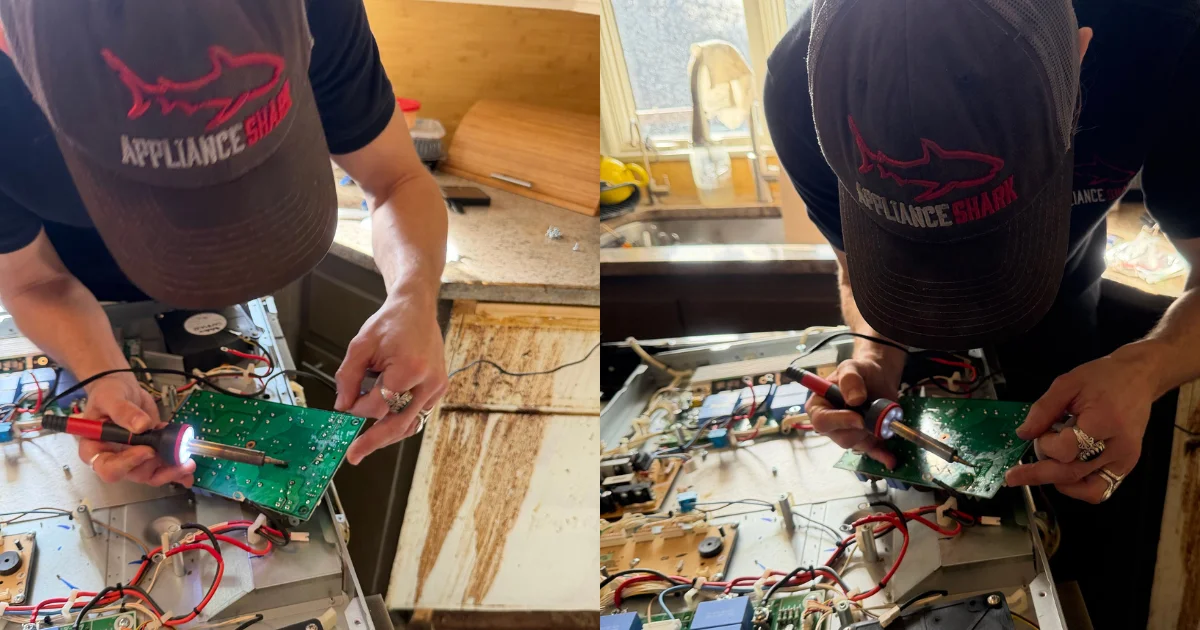
Accessing radiant elements typically requires removing the cooktop surface or accessing it from underneath the range, which is more involved than swapping a coil burner and is often better suited to a professional technician. Attempting to lift or remove a glass cooktop surface without the correct approach can also risk cracking the panel, which adds to the reasons this step is generally left to someone experienced with the specific range model.
Gas Igniter and Burner Switch Issues
On gas ranges, a stove burner not working is frequently linked to a faulty igniter, which is responsible for creating the spark needed to light the gas. When an igniter weakens or fails, the burner may click without lighting, or may not click at all.
Recognizing a Gas Stove Won’t Ignite Situation
A gas stove won’t ignite scenario typically presents as a clicking sound with no flame, a weak or intermittent click, or complete silence when the burner knob is turned. Each pattern can help narrow down whether the issue lies with the igniter itself, the burner switch, or a blocked gas port.
Blocked Burner Ports
Food debris or spills can sometimes block the small ports where gas exits the burner head, which can mimic an igniter failure. Cleaning the burner cap and ports is a reasonable first step before assuming a more involved electrical issue, and it’s worth checking after any recent spill or boil-over, since dried residue can be surprisingly effective at restricting gas flow.
Burner Switch and Control Failures
Both electric and gas ranges use switches or control modules to regulate burner heat levels. When a switch fails, a stove burner not working may occur at certain heat settings but not others, or the burner may not respond to the knob at all.
Signs of a Switch Issue
If a burner works at one setting but not another, or if turning the knob produces no response whatsoever, the switch or its wiring connection is a reasonable component to investigate before assuming the heating element or igniter itself has failed. Multimeter testing of the switch’s continuity across its various positions is typically how a technician confirms this diagnosis, since a visual inspection alone often isn’t enough to identify an intermittent electrical fault.
Basic Maintenance That May Help Prevent Burner Issues
While not every case of a stove burner not working can be prevented, a few habits can reduce the likelihood of certain causes:
- Cleaning spills promptly around burner ports and switches
- Ensuring coil burners are seated fully in their receptacles after cleaning
- Avoiding excessive force when removing or reinstalling coil burners, which can loosen connections over time
- Wiping down glass cooktop surfaces with appropriate cleaners to avoid buildup near sealed elements
These habits address some preventable contributors, though they won’t resolve a failed igniter, element, or switch.
Book a Range Repair Now!
When to Consider Replacing the Whole Unit
While single-component repairs are often sufficient for isolated issues, certain patterns suggest that replacing the entire range may be more practical than continuing to repair a stove burner not working.
Multiple Burners Affected
If more than one burner is affected simultaneously, particularly across both gas and electric functions on a dual-fuel range, this can indicate a broader control board or wiring issue that’s more costly to diagnose and repair than a single component failure. A pattern affecting multiple burners at once is generally a stronger signal to consult a technician early rather than testing individual parts first.
Age and Repair History
Ranges typically last between 13 and 15 years with regular use. A unit nearing or past this range that has required several burner or control repairs may be reaching a point where replacement is worth comparing against continued repair costs.
Cost Comparison
Weighing the estimated cost of diagnosing and repairing a persistent stove burner not working issue against the price of a comparable new range is a reasonable way to approach the decision, particularly on older units. Getting a written estimate before authorizing repair work can make this comparison more straightforward, since it removes guesswork from the equation.
Conclusion
A stove burner not working typically traces back to a handful of causes: a failed electric coil, a faulty gas igniter, a worn burner switch, or, on smooth-top ranges, a failed radiant element behind an electric cooktop not heating. A gas stove won’t ignite situation is a related but distinct symptom that generally points toward the igniter or gas supply specifically. Understanding which component is likely involved, along with the age and repair history of the range, supports a more informed decision for Roeland Park homeowners facing this issue and can make conversations with a technician more productive.
Not Sure What’s Causing the Problem?
If you’ve gone through the basics and still can’t pinpoint why your stove burner isn’t working, or if you’d rather have a professional diagnose the issue before it leads to further inconvenience or higher repair costs, a diagnostic visit is a practical next step.
The team at Appliance Shark serves Roeland Park and the broader Kansas City metro area, with experience across range and stove brands and common repair scenarios, including electric cooktop not heating and situations where a gas stove won’t ignite. If you’re ready to get a technician out to take a look, you can Book a Repair directly, no commitment required until you’ve reviewed the estimate and decided how you’d like to proceed.
If the assessment indicates the appliance is beyond cost-effective repair, that’s useful information too. You’re welcome to Visit our Appliance Store to explore replacement options, a straightforward next step if a new range or stove turns out to be the more practical choice.