
What Causes a Dryer Not Heating in Mission, KS – and How to Fix It
A dryer not heating is most often caused by a blown thermal fuse, a failed heating element, a blocked exhaust vent, or, on gas models, an issue with the gas valve or igniter. For anyone dealing with a dryer that runs but leaves clothes damp, this is a frustrating problem that disrupts routine laundry and raises questions about repair cost. Understanding the common causes can help narrow down the issue before deciding on next steps.
This guide covers the typical reasons behind a dryer not heating, how related symptoms like dryer taking too long to dry clothes or dryer overheating might connect to the issue, and what to consider when weighing repair against replacement. Working through these possibilities in order tends to be more efficient than replacing parts based on guesswork.
Key Takeaways
- A dryer not heating is commonly caused by a blown thermal fuse, a failed heating element, a blocked vent, or a gas valve issue on gas dryers.
- Dryer taking too long to dry clothes can sometimes appear before heat fails completely, offering an early warning sign.
- Dryer overheating is a related but separate concern that’s worth understanding alongside heating failures.
- Vent blockages are among the most preventable causes and are worth checking early in the troubleshooting process.
- The age of the dryer and the type of repair needed help determine whether repair or replacement makes more sense.
Step 1: Check the Thermal Fuse
The thermal fuse is a safety device designed to cut power to the heating element if the dryer overheats. Once it blows, it doesn’t reset on its own, and this is one of the most common reasons behind a dryer not heating, even though the drum continues to tumble normally.
What to Check
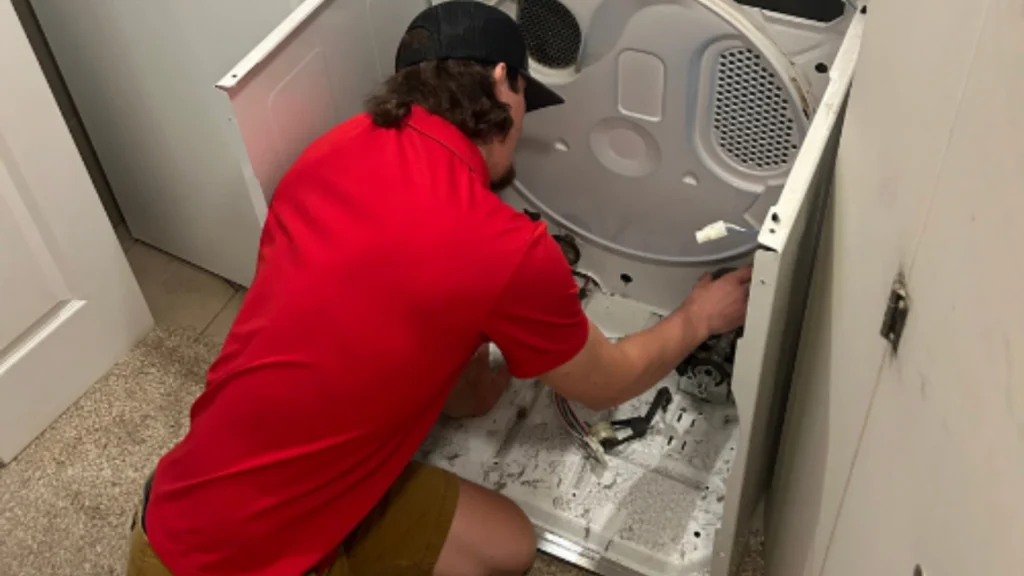
A blown thermal fuse can usually be tested with a multimeter after locating it near the exhaust duct or blower housing, though accessing it typically requires removing a panel. If the fuse has blown, it’s worth also checking for a vent blockage, since restricted airflow is a frequent cause of thermal fuse failure in the first place.
Replacing a thermal fuse without addressing the underlying airflow restriction that caused it to blow often means the new fuse will fail again within a short period, so it’s worth treating the two issues together rather than separately.
Step 2: Inspect the Heating Element
On electric dryers, the heating element generates the heat needed to dry clothes. When this element burns out or develops a break in its coil, the result is often a dryer not heating at all, while the drum and timer continue to function as expected.
Signs of Heating Element Failure
A failed heating element typically produces no warmth at all, rather than reduced heat. If the dryer instead runs warm but takes longer than expected, that pattern points more toward airflow restriction, covered in the next section, than a fully failed element.
Testing a heating element for continuity generally requires a multimeter and some familiarity with the dryer’s internal wiring, which is why this step is often better suited to a professional. In many electric dryers, the element is housed in an assembly that also includes a separate limit thermostat, and either part can be responsible for a lack of heat.
Step 3: Check for Vent Blockage
A blocked exhaust vent is one of the more overlooked causes tied to both a dryer not heating and dryer taking too long to dry clothes. When lint and debris accumulate in the vent line, airflow is restricted, which can trigger the thermal fuse or cause the dryer to run inefficiently.
Where to Look
- The lint trap itself, which should be cleaned before every load
- The flexible or rigid duct connecting the dryer to the exterior vent
- The exterior vent cap, which can become blocked by debris or nesting material
A dryer taking longer than expected to dry clothes, even when heat is present, is frequently traced back to restricted airflow rather than a failed component. This is one of the more preventable causes, since regular vent cleaning can reduce the likelihood of it developing in the first place.
Step 4: Consider Gas Valve or Igniter Issues
For gas dryers, a dryer not heating can also stem from a faulty gas valve solenoid, a failed igniter, or a flame sensor that isn’t detecting ignition properly. Unlike electric heating elements, these components involve gas supply and combustion, which introduces additional safety considerations.
Why This Requires Professional Attention
Diagnosing gas valve or igniter issues involves testing electrical components near a gas line, which carries safety risks beyond typical electrical troubleshooting. This is a step most homeowners should leave to a licensed technician rather than attempting independently.
If a gas dryer’s igniter glows but fails to ignite the gas, or clicks repeatedly without producing flame, this often points toward a valve solenoid rather than the igniter itself, though both parts are typically inspected together during a diagnostic visit.
Related Symptoms Worth Noting
Dryer Taking Too Long to Dry Clothes
Dryer taking too long to dry clothes doesn’t always mean the dryer has stopped heating altogether. It can indicate partial airflow restriction, a heating element that’s beginning to fail, or a moisture sensor that isn’t reading correctly. Tracking how gradually the problem developed can help narrow down the cause.
Dryer Overheating
Dryer overheating is generally the opposite concern from a dryer not heating, but the two can share a root cause. A blocked vent, for example, can cause the dryer to overheat internally, which is precisely the condition the thermal fuse is designed to respond to by cutting power to the heating element.
If a dryer has a history of dryer overheating followed by a period of not heating at all, a vent or airflow issue is a reasonable starting point for investigation.
Book a Dryer Repair Now!
Basic Maintenance That May Help Prevent Heating Issues
While not every case of a dryer not heating can be prevented, a few routine habits can reduce the likelihood of certain causes:
- Cleaning the lint trap before every load
- Having the exhaust vent professionally cleaned periodically, especially in longer duct runs
- Avoiding overloading the drum, which can restrict airflow and extend drying time
- Checking the exterior vent cap seasonally for debris or nesting material
These steps address some of the more preventable causes, though they won’t resolve a failed heating element, thermal fuse, or gas valve component.
Repair or Replace: What to Consider
Once the likely cause of a dryer not heating has been identified, the next question is whether repair is a practical option.
Age of the Dryer
Dryers typically last between 10 and 13 years with regular use. Units nearing or past this range are generally less likely to justify a costly repair, particularly one involving the gas valve or control board.
Cost of Parts and Labor
Thermal fuse replacement and vent cleaning tend to be relatively low-cost fixes. Heating element and gas valve repairs are more involved and worth comparing against the price of a new dryer, especially on older units.
Recurring Issues
A dryer that has repeatedly needed attention, whether for heating problems, dryer taking too long to dry clothes, or dryer overheating, may be signaling broader wear that’s worth factoring into a replacement decision.
Conclusion
A dryer not heating typically traces back to one of a few causes: a blown thermal fuse, a failed heating element, a blocked vent, or, on gas dryers, a valve or igniter issue. Dryer taking too long to dry clothes and dryer overheating are related symptoms that can help narrow down what’s happening, even though they don’t always share the exact same cause. Working through these possibilities methodically, and weighing the age and repair cost of the unit, supports a more informed decision for Mission homeowners facing this issue.
Not Sure What’s Causing the Problem?
If you’ve gone through the basics and still can’t pinpoint why your dryer isn’t heating, or if you’d rather have a professional diagnose the issue before it leads to further damage or higher repair costs, a diagnostic visit is a practical next step.
The team at Appliance Shark serves Mission and the broader Kansas City metro area, with experience across washer and dryer brands and common repair scenarios, including heating issues, dryer taking too long to dry clothes, and dryer overheating. If you’re ready to get a technician out to take a look, you can Book a Repair directly, no commitment required until you’ve reviewed the estimate and decided how you’d like to proceed.
If the assessment indicates the appliance is beyond cost-effective repair, that’s useful information too. You’re welcome to Visit our Appliance Store to explore replacement options, a straightforward next step if a new dryer turns out to be the more practical choice.