

Why Is Your Washing Machine Not Draining in Mission Hills, KS
A washing machine not draining is most often the result of a clogged drain hose, a blocked pump filter, a failing drain pump, or a lid switch that isn’t signaling the machine correctly. For anyone dealing with a washer full of standing water, this is a frustrating problem that can bring laundry to a halt and raise immediate questions about repair costs. Understanding the common causes can help identify the issue methodically rather than guessing at a fix.
This guide walks through the typical reasons behind a washing machine not draining, how related symptoms like washing machine making loud noise or washing machine shaking violently might fit into the picture, and what to weigh when considering repair versus replacement. Working through these possibilities in a logical order tends to be more efficient than replacing parts based on guesswork alone.
Key Takeaways
- A washing machine not draining is frequently caused by a clogged drain hose, a blocked pump filter, or a failing drain pump.
- Washing machine making loud noise during the drain or spin cycle can offer clues about which component is involved.
- Washing machine shaking violently is a related but separate issue that sometimes appears alongside drainage problems.
- Lid switches and control boards can also prevent proper draining, even when the pump itself is functioning.
- The age of the washer and the cost of parts are useful factors when deciding between repair and replacement.
Step 1: Check the Drain Hose
The drain hose carries water out of the washer and into a standpipe or utility sink. If this hose is kinked, clogged with lint and debris, or improperly positioned, water may not clear the tub, leading to a washing machine not draining even though the machine otherwise runs normally.
What to Check
Pull the washer away from the wall carefully and inspect the hose for kinks or bends. Check the end of the hose for buildup, and confirm it isn’t inserted too far into the standpipe, which can create a siphoning effect that pulls water back into the tub.
A partially blocked hose sometimes allows slow draining rather than a complete stop, which can make the issue harder to notice at first.
Step 2: Inspect the Drain Pump Filter
Many washing machines include an accessible filter designed to catch coins, lint, and small debris before they reach the pump. When this filter becomes clogged, it’s one of the more common reasons for a washing machine not draining, and often one of the easiest to resolve.
Locating and Clearing the Filter
The filter is typically located behind a small panel at the bottom front of the washer. Manufacturer instructions usually recommend placing a shallow pan underneath before opening it, since residual water will drain out. Clearing debris from this filter on a routine basis can help prevent future drainage problems.
Step 3: Test the Drain Pump
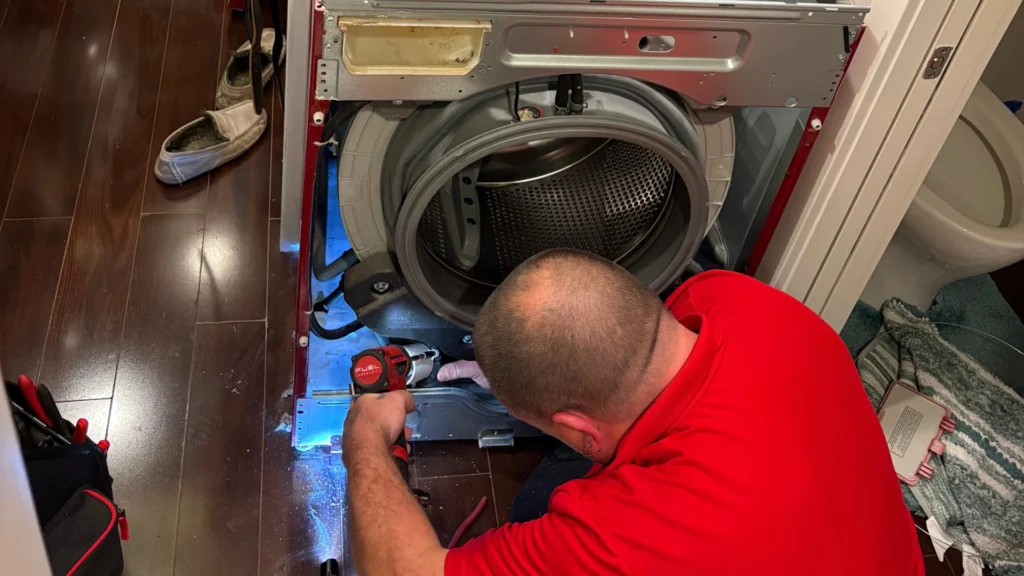
If the hose and filter are clear, the drain pump itself may be the source of a washing machine not draining. Pumps can fail due to worn motor components, a jammed impeller, or an electrical fault, and in some cases, they simply reach the end of their expected service life.
Signs of Pump Trouble
A drain pump that’s struggling often produces a distinct symptom: washing machine making loud noise during the drain cycle, such as a humming, grinding, or rattling sound. If the pump runs but no water leaves the tub, this points toward an obstruction or impeller failure rather than an electrical issue.
Testing a pump’s motor windings and connections generally requires basic electrical knowledge and tools, which is why many homeowners choose to have this checked by a technician. In some models, the pump can be accessed and replaced as a standalone part, while in others it’s integrated more closely with the motor assembly, which can affect repair cost and complexity.
Step 4: Consider the Lid Switch or Door Latch
Top-load washers typically use a lid switch, and front-load washers use a door latch, to confirm the unit is closed before running a cycle. If this switch fails or is misaligned, the machine may stop mid-cycle before draining completes, which can appear similar to a washing machine not draining even though the pump and hose are functioning correctly.
This is a lower-cost part to replace compared to a pump, and testing it is often more accessible for homeowners with basic tools. A simple way to narrow this down is checking whether the machine progresses through other cycle steps normally and only stalls near the drain or spin stage.
Step 5: Review the Control Board or Timer
Less commonly, a washing machine not draining can stem from the control board or timer failing to send the correct signal to the pump. This is more likely if the machine appears to skip the drain step entirely rather than starting it and stopping partway through.
Control board issues are typically more expensive to diagnose and repair, and on older machines, this is often the point where replacement becomes a more practical consideration.
Book a Washer Repair Now!
Related Symptoms Worth Noting
Washing Machine Making Loud Noise
Washing machine making loud noise isn’t always connected to draining, but the two can overlap when a pump is struggling. Noise coming specifically during the drain portion of a cycle, rather than throughout the wash or spin, is a useful detail to note when describing the issue to a technician.
Washing Machine Shaking Violently
A washing machine shaking violently is generally a separate issue from drainage, often related to an unbalanced load, worn suspension components, or a leveling problem. However, if a washing machine not draining also causes the tub to remain full and heavy during a spin attempt, that added weight can contribute to shaking that wouldn’t otherwise occur.
Basic Maintenance That May Help Prevent Drainage Issues
While not every case of a washing machine not draining can be prevented, a few routine habits can reduce the likelihood of certain causes:
- Emptying pockets before loading to reduce debris reaching the pump filter
- Checking and clearing the pump filter every few months
- Avoiding overloading the drum, which can strain the pump and drainage system
- Inspecting the drain hose periodically for kinks, especially after moving the washer
These steps won’t resolve mechanical or electrical failures, but they do address some of the more common and preventable causes.
Repair or Replace: What to Consider
Once the likely cause of a washing machine not draining has been identified, the next step is weighing whether repair is worthwhile.
Age of the Washer
Washing machines typically last between 10 and 14 years depending on usage and maintenance. Units nearing or beyond this range are generally less likely to justify a costly repair, particularly one involving the control board.
Cost of Parts and Labor
Clearing a filter or replacing a lid switch tends to be relatively inexpensive. Pump or control board replacement is more involved and worth comparing against the cost of a new washer, especially on older units.
Pattern of Repairs
A washer that has required several repairs recently, whether for drainage, washing machine making loud noise, or washing machine shaking violently, may be signaling broader wear that’s worth factoring into the decision.
Conclusion
A washing machine not draining typically points to one of several causes: a clogged drain hose, a blocked pump filter, a failing pump, a lid switch issue, or, less often, a control board problem. Washing machine making loud noise and washing machine shaking violently are related symptoms that can help narrow down what’s happening, though they don’t always share the same root cause. Working through these possibilities in order, and weighing the age and repair cost of the machine, supports a more informed decision for Mission Hills homeowners dealing with this issue.
Not Sure What’s Causing the Problem?
If you’ve gone through the basics and still can’t pinpoint why your washer isn’t draining, or if you’d rather have a professional diagnose the issue before it leads to further damage or higher repair costs, a diagnostic visit is a practical next step.
The team at Appliance Shark serves Mission Hills and the broader Kansas City metro area, with experience across washer and dryer brands and common repair scenarios, including drainage issues, washing machine making loud noise, and washing machine shaking violently. If you’re ready to get a technician out to take a look, you can Book a Repair directly, no commitment required until you’ve reviewed the estimate and decided how you’d like to proceed.
If the assessment indicates the appliance is beyond cost-effective repair, that’s useful information too. You’re welcome to Visit our Appliance Store to explore replacement options, a straightforward next step if a new washer turns out to be the more practical choice.