
Why Is My Whirlpool Dishwasher Not Cleaning in Overland Park, KS, And How Do I Fix It Fast?
If your Whirlpool dishwasher is running full cycles but leaving dishes dirty, greasy, or covered in film, the problem is almost always traceable to one of a handful of known causes. Most Whirlpool dishwasher cleaning failures come down to a clogged filter, blocked spray arms, water supply issues, or improper loading, not a broken machine. In many cases, what looks like a job requiring Whirlpool dishwasher repair is actually a maintenance issue you can address in under 30 minutes. For homeowners in Overland Park, KS, where hard water is a known factor, mineral buildup can add another layer to the problem. Understanding what’s actually going on inside your appliance helps you make a more informed choice: fix it yourself or call a technician.
Key Takeaways
- A Whirlpool dishwasher that isn’t cleaning properly is often caused by a clogged filter, blocked spray arms, or incorrect loading habits.
- Hard water buildup is a common issue in Overland Park and can significantly reduce cleaning performance over time.
- Several causes can be checked and resolved without professional help, while others involve internal components that may require a qualified technician.
- Routine maintenance, such as monthly filter cleaning and using a rinse aid, can prevent many common performance issues.
- Knowing when to stop troubleshooting and call a repair professional can prevent further damage and unnecessary costs.
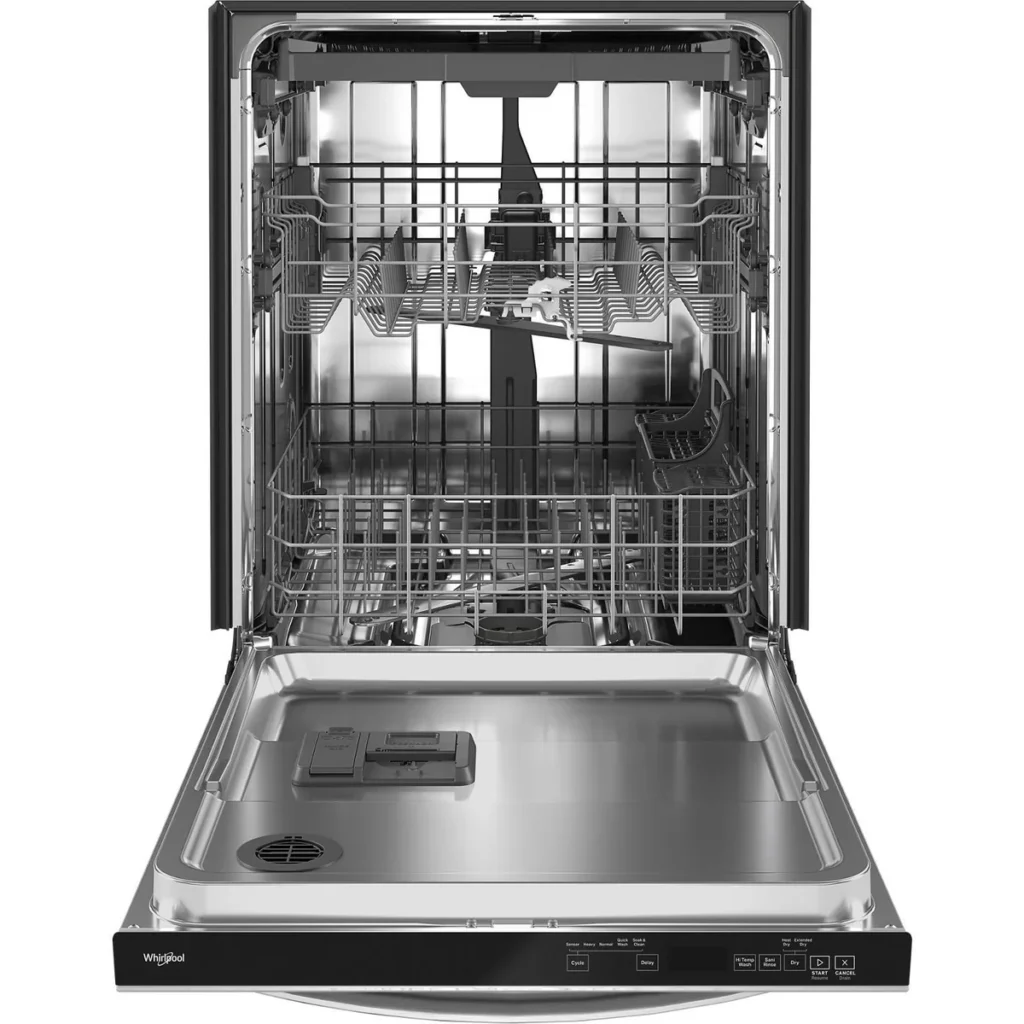
Common Reasons a Whirlpool Dishwasher Stops Cleaning Well
1. Clogged or Dirty Filter
The filter is the most overlooked part of a dishwasher. Whirlpool dishwashers manufactured after approximately 2010 use a manual filter system rather than a self-cleaning one. That means food particles, grease, and debris accumulate at the bottom of the tub and need to be removed by hand.
When the filter is clogged, water cannot circulate properly through the system. The result is poor cleaning, standing water at the bottom of the tub, or a musty odor.
How to check it: Remove the lower dish rack, locate the cylindrical filter at the bottom, and twist it counterclockwise to remove. Rinse it under warm water with a soft brush. Do not use abrasive materials that could damage the mesh.
Whirlpool recommends cleaning the filter at least once a month under normal use.
2. Blocked or Worn Spray Arms
The spray arms rotate and push pressurized water up through small holes to reach every dish. Over time, those holes get clogged with calcium deposits, food debris, or broken glass particles.
When even a few holes are blocked, the water pressure drops and some areas of the dishwasher receive little to no spray coverage.
How to check it: Remove the spray arms (they typically unscrew or pull off at the center). Hold each arm up to the light and look through the holes. Use a toothpick or thin wire to clear any blockages. Rinse under warm water before reattaching.
If the spray arms are cracked or no longer spin freely, they may need to be replaced. Replacement parts are available through Whirlpool’s authorized parts network.
3. Hard Water and Mineral Buildup
Overland Park draws its water from the Johnson County Water District, which sources from surface water with moderate to high mineral content. Over time, calcium and magnesium deposits accumulate inside the dishwasher tub, on the heating element, and across spray arm holes.
This buildup reduces cleaning efficiency, leaves a white haze on glassware, and can eventually damage internal components.
What helps: Using a rinse aid consistently helps water sheet off dishes and reduces spotting. Running a monthly cleaning cycle with a citric acid-based dishwasher cleaner (such as Affresh) helps remove mineral deposits from the interior.
If buildup is extensive, visible scaling on the tub walls or heating element, a technician may need to assess whether descaling is sufficient or if components are already affected.
4. Incorrect Loading Habits
This is one of the most common causes of poor cleaning performance and one of the easiest to correct. Dishes that are nested together, placed face-up, or blocking the spray arms will not get cleaned, regardless of the machine’s condition.
General loading guidance for Whirlpool dishwashers:
- Face all dishes inward and downward toward the spray arms
- Do not stack or nest bowls and plates
- Place tall items on the sides of the lower rack, not in the center
- Keep the detergent dispenser door clear of obstruction
Plastic containers and lightweight items on the lower rack can flip over and collect water. Keep them on the upper rack facing down at an angle.
5. Detergent Problems
Using the wrong type of detergent, too little, or detergent that has clumped due to moisture can all affect cleaning performance. Dishwasher detergent degrades over time, pods or powder that have been stored in a humid environment may lose effectiveness.
What to check:
- Confirm you are using automatic dishwasher detergent, not dish soap
- Check that the dispenser door opens fully during the cycle (it may be blocked by a utensil or large item)
- Store detergent in a cool, dry location and use it before the expiration date
Liquid detergent tends to be less effective in hard water areas. Pods or tablets with built-in rinse aid formulations may work better in Overland Park’s water conditions.
6. Water Temperature Too Low
Whirlpool dishwashers require water entering the machine to be at least 120°F (49°C) for detergent to activate properly and for grease to break down. If the incoming water is too cool, you may notice food residue remaining on dishes even after a full cycle.
How to check it: Run your kitchen faucet until the water feels hot, then fill a glass and use a kitchen thermometer to check the temperature. If it reads below 120°F, your water heater may need to be adjusted.
Many Whirlpool models also have an internal heating element that boosts water temperature. If this element has failed, the machine may not reach the temperature needed for effective cleaning even if hot water is supplied. A failed heating element typically requires a technician to diagnose and replace.
7. Water Supply or Inlet Valve Issues
If the dishwasher isn’t filling with enough water, it cannot clean effectively. Signs of insufficient water include dishes drying with food still on them or the spray arms spinning but producing little pressure.
The water inlet valve controls how much water enters the machine at the start of each cycle. A partially clogged or failing inlet valve can reduce water volume without triggering an error code.
What’s involved in diagnosing this: Checking the inlet valve requires turning off the water supply, accessing the valve behind the lower kick panel, and inspecting it for debris or signs of wear. This is a task that many experienced DIYers can handle, but it does involve shutting off the home’s water supply line to the dishwasher and working near electrical components. If you’re unsure, this is a reasonable point to contact a repair technician.
Book a Dishwasher Repair Now!
When to Call a Whirlpool Dishwasher Repair Technician in Overland Park
Some issues can be addressed safely at home. Others involve components, the control board, wash motor, heating element, or inlet valve, where an incorrect diagnosis or improper repair can cause additional damage or create a safety risk.
Consider contacting a qualified technician if:
- The dishwasher displays an error code you cannot identify or clear
- The motor sounds unusual, grinding, humming without water moving, or not running at all
- The heating element shows visible damage or scaling that cleaning products haven’t resolved
- Water is leaking from the door or beneath the unit
- You’ve checked the filter, spray arms, and loading and cleaning performance has not improved
A certified appliance repair technician can use diagnostic tools to isolate the exact cause, access authorized Whirlpool replacement parts, and ensure the repair is completed safely. In Overland Park, licensed appliance repair professionals must follow Kansas state guidelines for appliance service work.
Maintenance Tips to Prevent Future Cleaning Problems
Staying ahead of issues is generally more cost-effective than reactive repairs. These habits extend the life and performance of your Whirlpool dishwasher:
- Clean the filter monthly under warm running water
- Run a cleaning cycle monthly using a citric acid-based cleaner
- Use rinse aid consistently, refill when the indicator signals low
- Scrape, don’t pre-rinse, modern dishwashers are designed to handle food residue; excessive pre-rinsing can actually cause detergent to work less effectively
- Run hot water at the sink before starting to ensure the machine fills with hot water from the first cycle
- Leave the door slightly ajar after a cycle completes to allow moisture to escape and reduce odor buildup
Conclusion
A Whirlpool dishwasher that isn’t cleaning well is often pointing to a maintenance issue rather than a mechanical failure. In Overland Park, hard water conditions make regular filter cleaning and the consistent use of rinse aid especially important. Working through the most common causes, filter, spray arms, loading, detergent, water temperature, gives you a structured way to identify the problem before spending money on a service call.
That said, some issues fall outside of what can reasonably be addressed at home. When a dishwasher continues underperforming after basic troubleshooting, or when internal components are involved, scheduling a Whirlpool dishwasher repair with a qualified technician is the more reliable path forward. Understanding the difference between what’s manageable at home and what requires professional attention helps you make a more informed, less costly decision.
Ready to Get Clear Answers About Your Dishwasher?
If you’ve worked through the steps above and still aren’t sure what’s causing the problem, or if you’d rather have a professional take a look before attempting anything yourself, a diagnostic visit is a reasonable next step.
Getting eyes on the machine gives you specific, accurate information about what’s happening and what your options are. There’s no obligation to proceed with a repair after a diagnosis, and having that clarity puts you in a better position to decide what makes sense for your situation.
The team at Appliance Shark works with Overland Park homeowners on exactly these kinds of issues. If you’re ready to move forward, you can Book a Repair directly, it takes just a few minutes and gets the right technician scheduled for your area.
And if the diagnosis points toward replacement rather than repair, that’s useful information too. For anyone weighing their options, you’re welcome to Visit our Appliance Store to browse current models, no pressure, just a practical next step if a new appliance turns out to be the better call.