
What Causes Ice Maker Failures in Mission Hills, KS Luxury Homes?
Key Takeaways
- Built-in and column ice makers common in Mission Hills luxury homes are more mechanically complex than standard refrigerator ice makers, making diagnosis and repair more involved.
- Clogged water supply lines, neglected water filters, and mineral buildup from hard water are among the most frequent causes of ice maker failure in this area.
- Electronic control board faults and faulty water inlet valves are harder to diagnose and typically require a trained technician with brand-specific knowledge.
- Regular maintenance, particularly filter replacement and periodic cleaning, can extend the service life of high-end ice makers significantly.
- Understanding the likely cause of a failure helps homeowners have more productive conversations with repair technicians and make better-informed repair decisions.
Introduction
Ice maker failures in Mission Hills, KS luxury homes tend to be more complex than they first appear, and more varied in their causes. High-end built-in ice makers from brands like Sub-Zero, Scotsman, U-Line, and True Refrigeration are sophisticated appliances with multiple interdependent components. When one part of the system underperforms, the entire ice production process can slow or stop.
For homeowners in Mission Hills, where premium appliances are integrated into custom cabinetry and high-specification kitchens, understanding why these failures happen is the first step toward addressing them effectively. This article breaks down the most common causes of ice maker failure specific to the types of units found in luxury homes, and what each issue generally means in terms of diagnosis and repair.
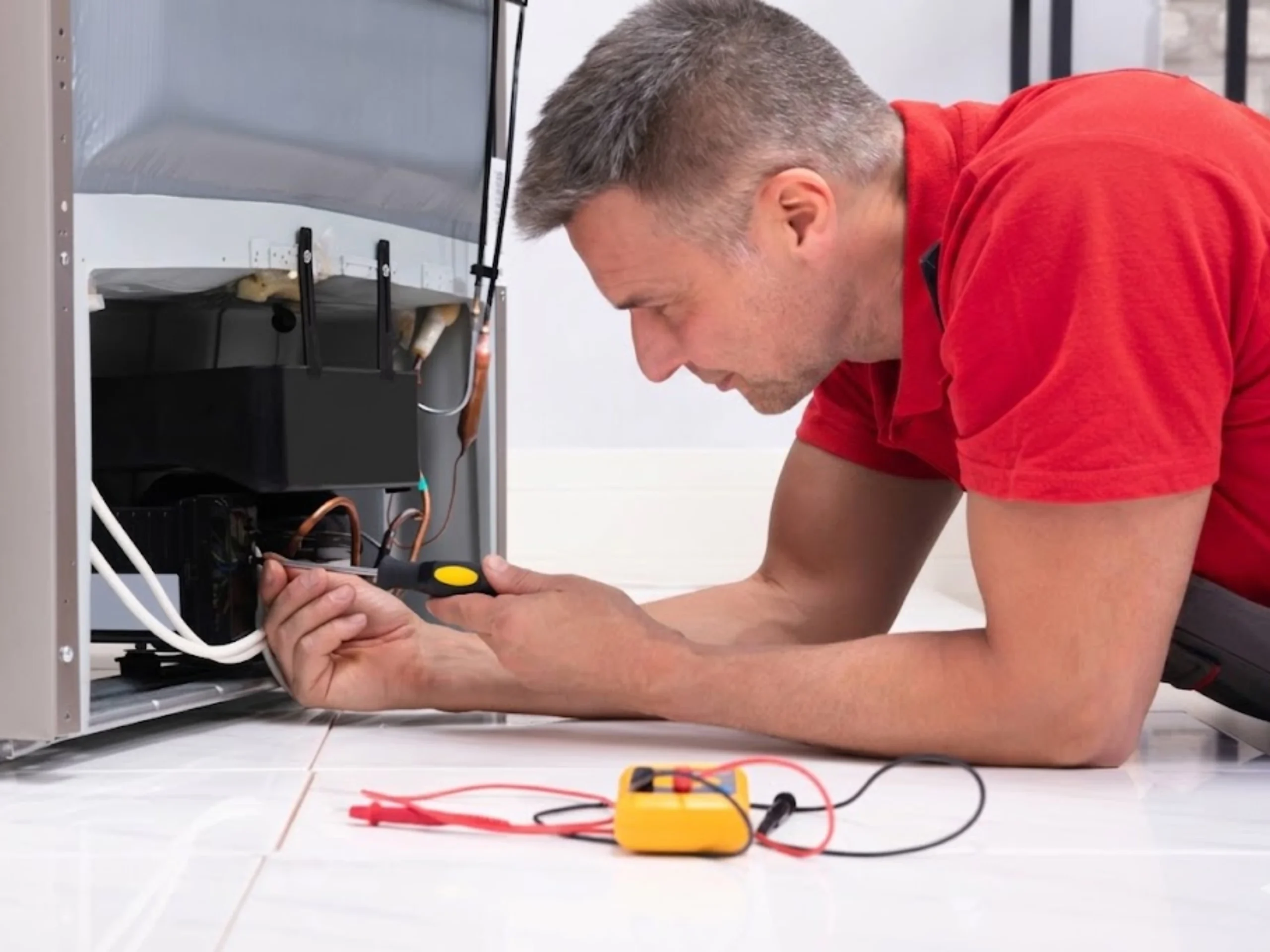
Why Luxury Ice Makers Are More Prone to Certain Failures
The Complexity of Built-In and Column Ice Makers
Freestanding and built-in ice makers used in high-end homes operate differently from the basic ice maker unit found inside a standard refrigerator. They run continuously, produce ice in larger volumes, and rely on more sophisticated refrigeration circuits, water management systems, and electronic controls.
This complexity creates more potential failure points. A standard refrigerator ice maker has a relatively small number of components. A dedicated built-in unit, particularly a commercial-style or column ice maker, may include an independent compressor, a water recirculation system, a harvest mechanism, sensors, and an electronic control board that coordinates all of these functions.
When any one component degrades or fails, it can interrupt the entire production cycle in ways that aren’t always obvious from the outside.
The Role of Water Quality in Mission Hills
Water quality plays a significant role in ice maker performance, and Mission Hills, like much of the Kansas City metro area, is served by municipal water that carries measurable mineral content. Over time, calcium, magnesium, and other dissolved minerals accumulate inside water lines, on evaporator plates, and within filtration components.
This mineral accumulation doesn’t cause immediate failure. Instead, it gradually reduces efficiency, restricts water flow, and creates the conditions for component wear. Homes that use their ice makers heavily or that haven’t maintained filtration components on schedule tend to see these effects more quickly.
The Most Common Causes of Ice Maker Failure in Luxury Homes
1. Clogged or Restricted Water Supply Lines
The water supply line delivers water from the household supply to the ice maker. In built-in units, this line is often a braided stainless steel or copper connection running through cabinetry, not always easy to inspect visually.
Over time, mineral deposits can partially obstruct the line, reducing water flow below the level needed for proper ice formation. Incomplete ice cubes, small or hollow ice, or no ice production at all can all result from inadequate water pressure or flow reaching the unit.
In some cases, the line itself isn’t clogged but is kinked from installation or from the unit being pushed back against cabinetry. This is particularly common during installation or after any service work where the appliance was moved.
A technician will typically check water pressure at the inlet and trace the supply line to identify obstructions or physical damage.
2. Neglected or Expired Water Filters
Most high-end ice makers include a built-in water filtration system designed to remove sediment, chlorine, and other impurities before water enters the ice-making mechanism. These filters have a rated service life, typically every six months or 500 gallons, though this varies by manufacturer and model.
When filters are not replaced on schedule, they become saturated and can actually restrict water flow more than an unfiltered line would. A severely degraded filter may also allow contaminants to pass through that were previously being captured.
The result is often reduced ice production, off-tasting or odorous ice, or in some cases, complete cessation of ice output as the machine’s flow sensors detect insufficient water supply.
Filter replacement is one of the most commonly overlooked maintenance tasks for built-in ice makers, particularly in homes where the unit was installed by a contractor and the owner was not given a clear maintenance schedule.
3. Mineral Scale Buildup on the Evaporator
The evaporator is the surface on which water freezes to form ice. In most built-in ice makers, water flows over or through the evaporator in a thin sheet or series of jets, and ice forms as the refrigerant circulates through the evaporator plates.
Mineral scale, primarily calcium carbonate, deposits on this surface over time, creating an insulating layer between the refrigerant and the water. As the scale thickens, the freezing process becomes less efficient: ice takes longer to form, cube sizes become inconsistent, and production volume drops.
Severe scale buildup can also interfere with the harvest cycle, the process by which ice is released from the evaporator and falls into the storage bin. Ice that doesn’t release cleanly can jam the mechanism or trigger error codes on electronically controlled units.
Many manufacturers recommend a descaling cleaning cycle every three to six months, using a food-safe cleaning solution designed for ice makers. In hard water areas, this interval may need to be shorter.
4. Faulty Water Inlet Valve
The water inlet valve is an electrically operated valve that opens to allow water into the ice maker when the machine calls for it. When this valve fails, either staying closed when it should open, or failing to close fully, ice production is directly affected.
A valve that won’t open results in no water reaching the machine and therefore no ice. A valve that doesn’t close fully can cause water to slowly drip into the machine between cycles, leading to ice clumping in the bin, overflow, or in some cases water on the floor near the unit.
Inlet valve failure is relatively common in appliances that are several years old. The valve contains a small mesh screen that can also become clogged with sediment, sometimes cleaning this screen resolves a flow issue without requiring full valve replacement.
Diagnosis typically involves testing the valve’s electrical solenoid and checking for water flow, work that requires the unit to be partially disassembled. A trained technician offering ice maker repair in Mission Hills, KS can perform this diagnostic safely without voiding manufacturer warranties.”
5. Electronic Control Board Faults
High-end ice makers rely on electronic control boards to manage the entire production cycle: calling for water, monitoring ice formation, triggering the harvest mechanism, monitoring bin levels, and managing defrost cycles.
Control board failures can manifest in a wide variety of ways, erratic behavior, failure to complete cycles, error codes, or complete loss of function. Because the control board coordinates so many functions, a fault can mimic the symptoms of other component failures, making accurate diagnosis more difficult.
Control boards in premium ice maker brands are often proprietary and model-specific, meaning they must be sourced through manufacturer channels or authorized parts suppliers. This can affect repair timelines and parts costs.
Diagnosis of a control board fault typically requires eliminating other possible causes first, a technician will usually rule out simpler issues (water supply, filters, thermistor) before concluding the board itself is at fault.
6. Refrigerant Issues and Compressor Problems
Ice makers rely on a refrigeration circuit, compressor, condenser, evaporator, and refrigerant, to generate the cold temperatures required for ice formation. Problems within this circuit are less common than water-side issues, but they do occur, particularly in older units.
Low refrigerant charge (caused by a slow leak) results in reduced cooling capacity, longer freeze cycles, and eventually, ice that forms too slowly or not at all. Refrigerant issues require a licensed HVAC or appliance refrigeration technician to diagnose and address, as handling refrigerants is federally regulated.
Compressor wear or failure represents a more significant and typically more costly repair. In older units, a compressor failure is often the point at which repair versus replacement becomes a genuine financial consideration.
7. Sensor and Thermistor Failures
Modern ice makers use temperature sensors (thermistors) to monitor the temperature at various points in the system and communicate that data to the control board. These sensors tell the machine when water is cold enough to have frozen, when the harvest cycle should begin, and when the storage bin is full.
A faulty thermistor can cause the machine to behave erratically, harvesting before ice is fully formed, failing to harvest at all, or continuously running when the bin is already full.
Thermistor failures are not immediately obvious and typically require electronic testing by a technician using diagnostic tools or the appliance’s built-in diagnostic mode (available on many premium brands).
Book a Ice Maker Repair Now!
Maintenance Practices That Can Reduce Failure Risk
While not all ice maker failures are preventable, several maintenance practices are associated with better long-term performance:
- Replace water filters on schedule. Follow manufacturer recommendations, typically every six months, and adjust more frequently if your household water has higher mineral content.
- Run cleaning cycles regularly. Most manufacturers include a cleaning cycle mode; use a manufacturer-approved ice machine cleaner every three to six months.
- Inspect the water supply line periodically. Look for kinking, corrosion at connection points, or visible mineral deposits near fittings.
- Keep the condenser clean. Built-in ice makers have air-cooled condensers that collect dust and debris. A clogged condenser reduces cooling efficiency and puts stress on the compressor.
- Monitor ice quality as an indicator. Changes in ice cube size, clarity, or taste are often early signals of a developing issue, noting these changes early allows for earlier diagnosis.
Conclusion
Ice maker failures in Mission Hills luxury homes are rarely the result of a single dramatic event. More often, they develop gradually, through accumulated mineral scale, a filter that was due for replacement months ago, or a water valve that has been slowly losing efficiency. Understanding the most common causes of these failures gives homeowners a clearer frame of reference when something goes wrong and a better basis for evaluating repair options.
For built-in and column ice makers from premium brands, diagnosis and repair typically require a technician with specific brand knowledge and access to manufacturer parts. Being informed about what’s likely causing an issue, and what the repair process generally involves, supports better decision-making at every step.
Want a Clear Picture of What’s Happening With Your Ice Maker?
If your ice maker has stopped producing ice, is behaving inconsistently, or you’ve noticed changes in ice quality, a professional diagnostic is the most reliable way to understand what’s happening and what your options are.
A qualified appliance repair technician familiar with luxury ice maker brands serving Mission Hills, KS can inspect your unit, identify the likely cause, and walk you through repair options, without pressure or obligation.
Schedule a diagnostic call to get accurate information and a clear path forward.
The point about ice makers putting extra strain on refrigerator components is something a lot of homeowners overlook until a bigger problem shows up. Regularly checking for small issues like leaks, clogged water lines, or unusual ice production can help catch problems early and potentially prevent more expensive repairs down the road.