
How to Spot Early Warning Signs You Need Dishwasher Repair in Prairie Village, KS
Key Takeaways
- Standing water, unusual noises, and cloudy dishes are among the most common early signals that a dishwasher needs professional attention.
- Ignoring minor symptoms, like a leaking door seal or an incomplete wash cycle, can lead to more extensive water damage or appliance failure.
- Prairie Village homeowners with high-end appliances may face higher repair complexity and should seek technicians familiar with their specific brands.
- Most dishwasher problems stem from a small number of repairable components, including door latches, spray arms, pumps, and control boards.
- Early diagnosis by a qualified appliance repair technician can help homeowners make informed decisions about repair versus replacement.
Introduction
If your dishwasher is leaving food residue on plates, pooling water on the floor, or shutting off mid-cycle, those aren’t quirks to ignore, they’re signals that something has gone wrong internally. For homeowners in Prairie Village, KS, where well-maintained homes and premium appliances are the norm, catching these signs early can be the difference between a straightforward repair and a full appliance replacement.
This guide walks through seven of the most recognizable early warning signs that your dishwasher may need professional attention. Understanding these symptoms, and what typically causes them, helps you have more informed conversations with a repair technician and make decisions that protect both your appliance investment and your home.
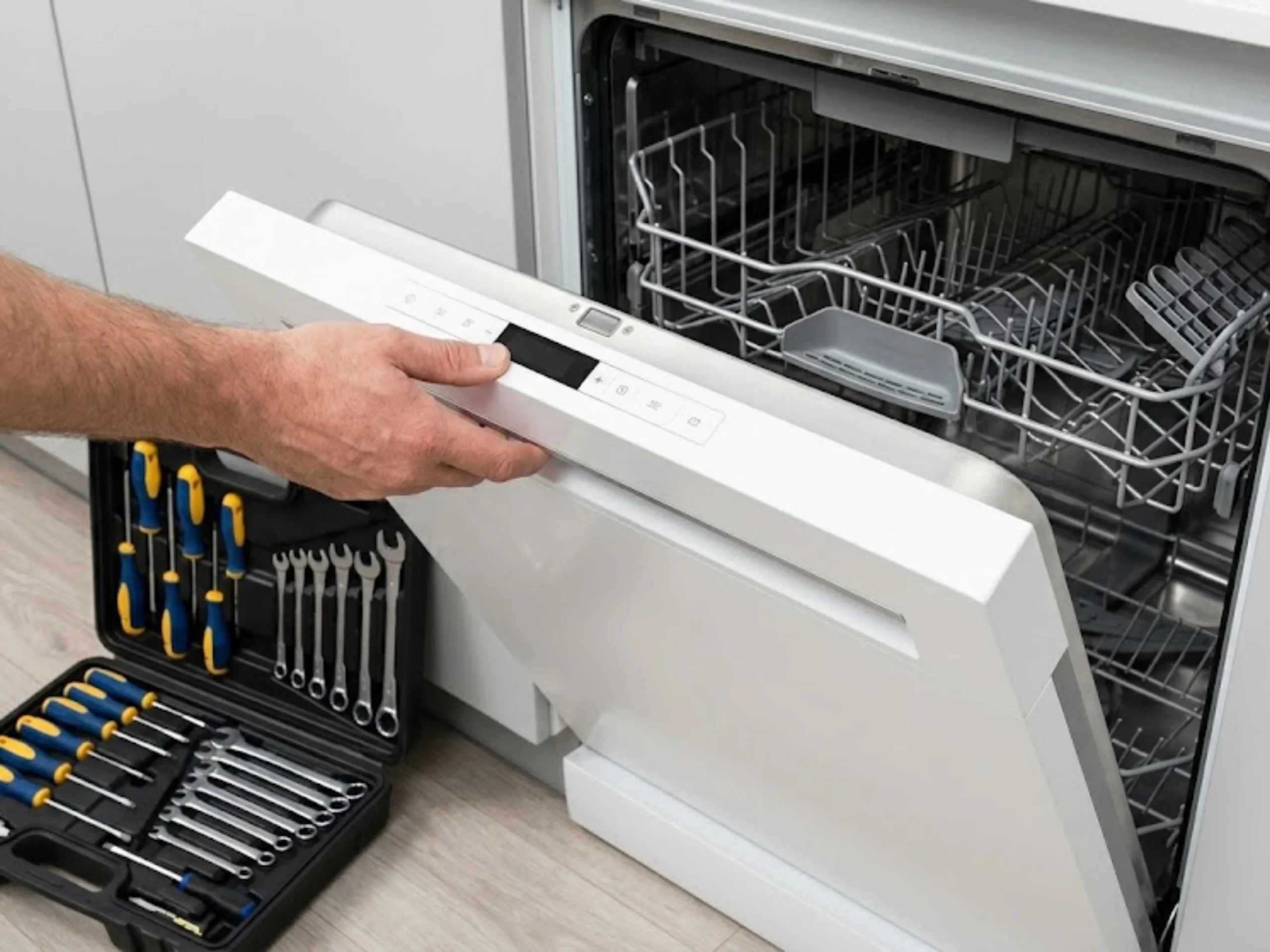
7 Early Warning Signs Your Dishwasher May Need Repair
1. Standing Water at the Bottom of the Tub
One of the clearest indicators of a problem is water that remains pooled at the bottom of the dishwasher after a completed cycle.
This usually points to a drainage issue. The drain hose may be kinked, clogged, or improperly installed. In other cases, the drain pump or filter assembly may be blocked with food debris or mineral buildup, both common in areas with hard water.
A small amount of residual water (under the filter) is normal by design. However, visible standing water across the entire tub floor is not normal and warrants inspection.
Left unaddressed, drainage problems can create conditions for mold growth and may eventually cause pump motor failure.
2. Water Leaking Onto the Floor
Puddles around the base of your dishwasher are a sign that water is escaping where it shouldn’t. This is one of the more urgent symptoms to address, particularly in homes with hardwood floors or finished cabinetry.
Common causes include:
- Worn door gaskets: The rubber seal around the door degrades over time, allowing water to seep past the door during operation.
- Loose or cracked door latch: A door that doesn’t close fully will allow water to escape during high-pressure wash cycles.
- Faulty float switch: This component monitors water levels inside the tub. When it malfunctions, the dishwasher may overfill.
- Damaged spray arm: A cracked or dislodged spray arm can redirect water toward areas it isn’t designed to reach.
Even small leaks can cause significant damage to subflooring and cabinetry over time. Early diagnosis is especially important in kitchens with custom millwork or premium flooring materials.
3. Dishes Coming Out Dirty, Greasy, or with Food Residue
A dishwasher that doesn’t clean effectively is one of the most frustrating, and commonly misdiagnosed, problems homeowners encounter.
Before assuming mechanical failure, it’s worth checking:
- Whether the spray arms are unobstructed and rotating freely
- Whether the filter has been cleaned recently (many homeowners are unaware their dishwasher has a removable, cleanable filter)
- Whether dishes are loaded in a way that blocks water circulation
If basic maintenance steps don’t improve results, the issue may lie with the water inlet valve, a failing pump, low water temperature, or a malfunctioning detergent dispenser. A technician can assess which component is underperforming.
4. Cloudy, Spotty, or Filmy Glassware
Glassware that comes out looking dull or streaked is a common complaint, and the cause isn’t always mechanical. However, persistent cloudiness that doesn’t improve with better detergent or rinse aid can indicate a problem worth investigating.
Etching (permanent surface damage) is often caused by water that is too hot, detergent overuse, or overly soft water, and unfortunately cannot be reversed.
Mineral film or hard water deposits, by contrast, are a surface issue that can often be managed with the right rinse aid and cycle settings.
If cloudy results persist alongside other symptoms, particularly incomplete cycles or low water pressure inside the tub, it may point to a failing heating element or water inlet valve.
5. Unusual Noises During Operation
Dishwashers produce some noise during normal operation, the sound of water circulation, pump activity, and spray arms rotating. However, certain sounds fall outside that normal range.
Grinding or rattling: Often caused by debris (broken glass, a utensil, or mineral buildup) caught in the pump or spray arm assembly. This should be addressed promptly to avoid pump damage.
Loud banging or thumping: May indicate that the spray arm is hitting dishes due to improper loading, but can also signal a failing wash pump impeller.
Humming without water movement: If the dishwasher hums but water isn’t circulating, the motor or pump may be struggling to function, or the water inlet valve may not be opening properly.
Persistent or new noises that weren’t present before are worth having evaluated, particularly in appliances still within their expected service life.
6. Incomplete or Interrupted Wash Cycles
A dishwasher that stops mid-cycle, skips stages, or repeatedly resets is exhibiting control-related or sensor-related symptoms.
Modern dishwashers rely on electronic control boards, turbidity sensors (which detect water clarity), and thermistors (which measure water temperature) to manage cycle progression. When any of these components malfunction, the appliance may pause, abort, or behave erratically.
Less complex causes can include:
- A door latch that isn’t engaging fully, causing the cycle to pause as a safety measure
- Power supply inconsistencies at the outlet or junction box
- A malfunctioning timer or control board
Intermittent issues are sometimes the hardest to diagnose, as they may not be reproducible during a technician’s visit. Documenting when the problem occurs, what cycle, at what stage, how often, can assist with diagnosis.
7. Rust, Discoloration, or Visible Damage Inside the Tub
The interior of a dishwasher is designed to withstand high heat, moisture, and repeated chemical exposure. When visible rust spots, chipped coating, or discoloration appear, it may indicate that the protective lining has been compromised.
Rust spots are commonly caused by rusting dish racks, the plastic coating on rack tines wears over time, exposing the metal underneath. Rust from the racks can transfer to the tub walls and to dishes themselves.
Discoloration or staining can result from mineral deposits, certain foods, or a malfunctioning heating element that scorches the tub surface.
While cosmetic damage doesn’t always affect appliance function, extensive rust or coating damage can affect sanitation, shorten appliance life, and in some cases void manufacturer warranties.
Book an Dishwasher Repair Now!
Why Prairie Village Homeowners Should Act on These Signs Early
Prairie Village is home to a wide range of higher-end kitchen appliances, including brands like Bosch, Miele, KitchenAid, and Thermador, that require technicians with specific training and access to manufacturer parts.
Delaying repairs on premium appliances can sometimes narrow the repair window. Components become unavailable, secondary damage compounds the primary issue, and in some cases a repairable problem becomes a reason for full replacement.
Appliance repair professionals who are familiar with the brands and installation configurations common in Prairie Village can help homeowners assess whether repair or replacement makes more long-term sense, a determination that should be based on the appliance’s age, remaining service life, and cost of the specific repair.
What to Expect When You Contact a Repair Technician
When you reach out to a dishwasher repair technician, they will typically:
- Ask about the symptoms you’ve observed and when they started
- Perform a diagnostic inspection of the appliance, which may include running a cycle to observe behavior
- Identify the likely cause and affected components
- Provide a repair estimate, including parts and labor
In most cases, common repairs, replacing a door gasket, cleaning or replacing a pump filter, swapping out a water inlet valve, can be completed in a single visit.
More complex repairs involving electronic control boards or internal pump assemblies may require part sourcing and a follow-up appointment.
Conclusion
Recognizing early warning signs in your dishwasher isn’t about causing alarm, it’s about staying informed. Symptoms like pooling water, leaks, incomplete cycles, or unusual noises are the appliance’s way of signaling that something isn’t functioning as designed.
For homeowners in Prairie Village, KS, where appliances often represent a meaningful investment, paying attention to these signs and seeking professional evaluation early gives you more options and more information to act on. Whether the outcome is a minor repair, a component replacement, or a planned upgrade, that decision is better made before a small issue becomes a significant one.
Understanding what’s happening with your appliances, and why, is always the right starting point.
Ready to Get Clarity on Your Dishwasher Issue?
If you’ve noticed one or more of the warning signs described above, the next step is a professional diagnostic, not guesswork.
A qualified appliance repair technician can inspect your dishwasher, identify what’s happening, and give you a clear picture of your repair options and associated costs. There’s no obligation involved in getting a diagnosis, and having accurate information is the best foundation for any decision you make about your appliance.
Schedule a diagnostic call with a local dishwasher repair professional serving Prairie Village, KS, and get the information you need to move forward with confidence.
One thing homeowners often overlook is that small changes in dishwasher performance—like longer cycle times, unusual noises, or dishes coming out less clean—can be early warning signs of a bigger issue. Catching those problems early can help avoid more expensive repairs and unexpected breakdowns later on.