
What Are the Signs You Need Dryer Repair in Roeland Park, KS?
Key Takeaways
- Six warning signs, extended drying times, no heat, unusual noises, burning smells, excessive heat, and failure to start, are the most reliable indicators that a dryer needs professional attention.
- A burning smell from a dryer is a fire-safety concern, not just a performance issue, and should prompt immediate action rather than continued use.
- Many dryer symptoms that appear to be major mechanical failures are caused by relatively straightforward issues, a clogged vent, a failed heating element, or a worn belt, that a qualified technician can diagnose and address efficiently.
- Dryers that overheat or run excessively long cycles place stress on clothing and increase energy consumption, signs that are easy to overlook but worth addressing early.
- Understanding what each symptom typically indicates helps Roeland Park homeowners have more informed conversations with repair technicians and make better decisions about repair versus replacement.
Introduction
The signs that a dryer needs professional repair are usually present well before the appliance stops working entirely, and recognizing them early is the most practical way for Roeland Park, KS homeowners to avoid both safety risks and larger repair bills. The six most common warning signs are extended drying cycles, complete loss of heat, unusual noises during operation, a burning smell, excessive heat output, and failure to start or complete a cycle. Each of these symptoms points to a specific category of mechanical or electrical fault, and most are more straightforward to address when caught early.
This guide explains what each of these warning signs typically means, what components are usually involved, and why prompt professional assessment is the appropriate response to each one.
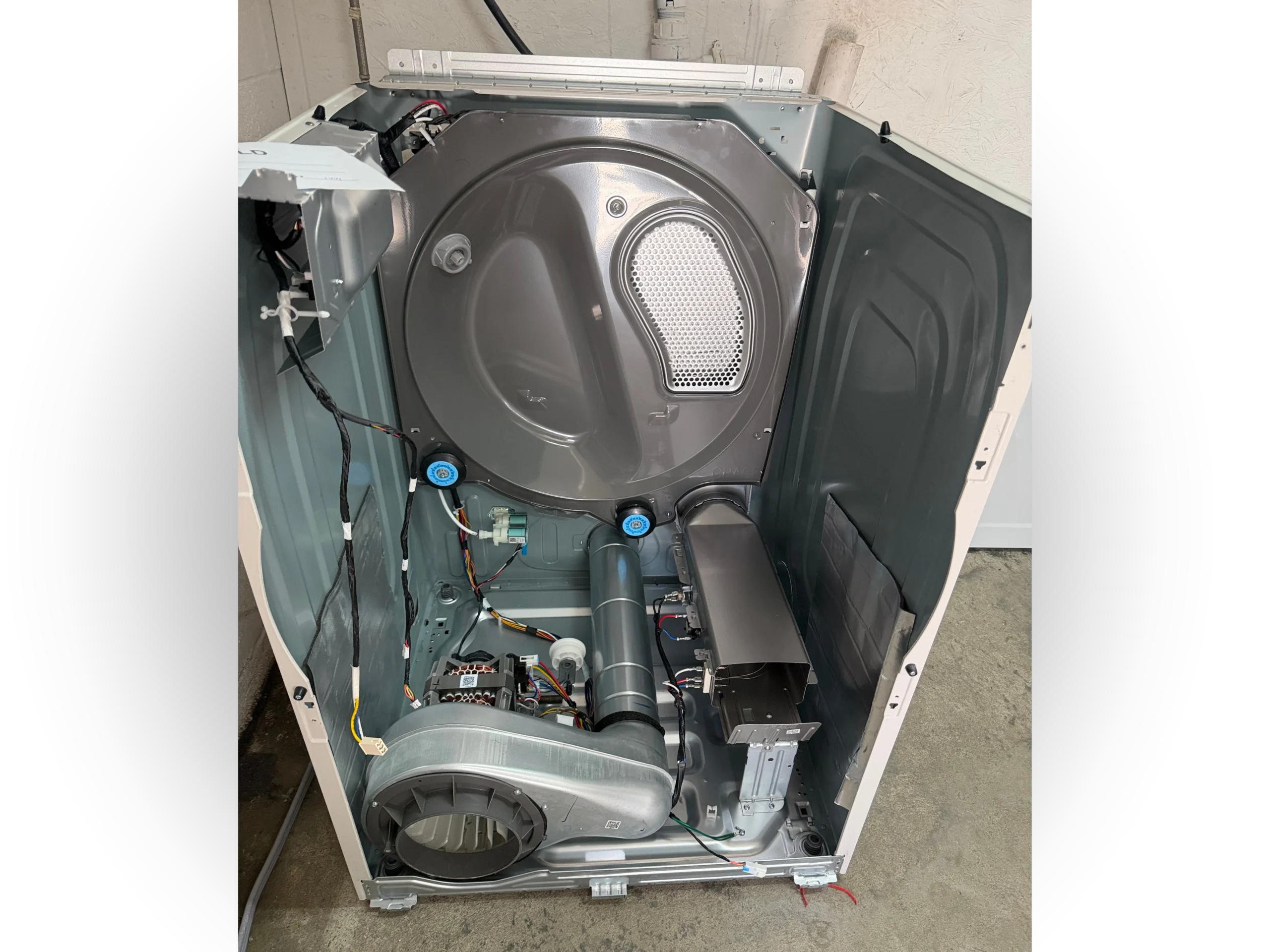
Why Dryer Symptoms Deserve Prompt Attention
Performance Symptoms vs. Safety Symptoms
It’s useful to divide dryer warning signs into two categories: performance symptoms and safety symptoms. Performance symptoms, clothes taking too long to dry, the drum not spinning, cycles not completing, affect how well the appliance functions but don’t typically create immediate safety concerns.
Safety symptoms, a burning smell, visible scorch marks, excessive heat output, or sparking, require a different level of urgency. Dryers are one of the leading causes of residential appliance fires in the United States, and the majority of those fires involve either a failure to clean the dryer vent or a mechanical fault that caused the appliance to overheat.
Distinguishing between these two categories helps prioritize the response. A performance symptom warrants scheduling a repair soon. A safety symptom warrants stopping use of the appliance and scheduling a repair immediately.
The Role of the Dryer Vent in Many Common Problems
Before exploring specific symptoms, it’s worth understanding the role the dryer vent plays in dryer function, because a restricted or clogged vent is implicated in a wide range of symptoms that might otherwise seem unrelated.
The dryer vent exhausts hot, moist air from the drum to the exterior of the home. When this vent becomes restricted by lint buildup, a bird nest, or a crushed duct section, hot air cannot escape efficiently. The result is a dryer that takes longer to dry clothes, overheats, and in some cases triggers thermal safety switches that shut the machine down mid-cycle.
A clogged vent is one of the most common and most preventable causes of dryer service calls. Cleaning the vent annually, and more frequently in households with heavy laundry use, addresses this root cause before it produces symptoms.
The 6 Warning Signs Your Dryer Needs Professional Repair
1. Clothes Taking Longer Than One Cycle to Dry
A dryer that requires two or more cycles to fully dry a normal load is one of the most common complaints homeowners bring to appliance repair technicians. The symptom is easy to overlook because the dryer technically still works, it just works poorly.
Extended drying times typically indicate one of three things: restricted airflow through a clogged vent, insufficient heat output from a degraded or failing heating element, or reduced drum tumbling efficiency due to a worn belt or drum roller.
Before calling a technician, it’s worth checking whether the lint trap has been cleaned recently and whether the exhaust vent at the exterior of the home is unobstructed. If both are clear and drying times remain long, the issue is likely internal and warrants professional diagnosis.
2. No Heat or Insufficient Heat
A dryer that tumbles but produces no heat, or noticeably less heat than normal, is a clear indicator of a heating system fault. In electric dryers, the most common cause is a failed heating element, which is a component that burns out over time and requires replacement. In gas dryers, the issue may involve the igniter, the gas valve coils, or the flame sensor.
Thermal fuses are another common cause of no-heat symptoms in both gas and electric dryers. A thermal fuse is a one-time safety device designed to blow if the dryer overheats, cutting power to the heating circuit to prevent fire. Once a thermal fuse blows, it must be replaced, but more importantly, the underlying cause of the overheating (usually a clogged vent or a failed cycling thermostat) should be identified and addressed at the same time.
Replacing the fuse without addressing the root cause typically results in the new fuse blowing again. A technician who understands the full system will test for underlying causes as part of the repair, not just replace the failed component. Homeowners can review what professional dryer repair services typically cover to better understand what a thorough diagnostic looks like.
3. A Burning Smell During Operation
A burning smell from a dryer should prompt immediate attention, stopping the dryer, removing laundry, and not running the appliance again until it has been assessed by a technician.
The smell can come from several sources. Lint accumulation inside the dryer cabinet or on the heating element is the most common cause and is also the most fire-relevant. Lint is highly flammable, and lint that has built up near the heating element or inside the exhaust path can ignite under normal operating temperatures.
Other causes include a failing motor that is overheating, worn drum seals that are making contact with the drum and creating friction heat, or an electrical fault in the wiring or control components. Each of these causes is distinguishable during a professional diagnostic, but all of them share the characteristic that continued use of the appliance before diagnosis increases risk.
4. Unusual Noises, Squealing, Grinding, or Thumping
Dryers produce a consistent low hum during normal operation. New or changing sounds, squealing, grinding, rattling, or rhythmic thumping, indicate that a mechanical component is wearing or has already failed.
- Squealing typically indicates a worn drum bearing, a degraded drum belt, or worn idler pulley, the pulley that maintains tension on the drum belt. These components wear over time with normal use and are among the more common dryer repairs.
- Grinding suggests that a worn bearing or support roller is creating metal-on-metal contact. This type of wear tends to accelerate quickly once it begins, and addressing it early typically results in a simpler repair than waiting until the component fails completely.
- Rhythmic thumping is often caused by a flat spot on a drum support roller, a small wheel that the drum rests on and rotates against. These rollers wear unevenly over time and produce a thumping sound that becomes more pronounced as the flat spot grows.
5. Excessive Heat, Clothes or the Exterior of the Machine Feel Too Hot
A dryer that runs hotter than it should is producing the opposite performance problem from a no-heat fault, but it’s often more concerning from a safety standpoint. Overheating is one of the primary mechanisms behind dryer-related fires.
Common causes include a malfunctioning cycling thermostat (which normally regulates operating temperature by cycling the heating element on and off), a clogged exhaust vent preventing heat dissipation, or a failed high-limit thermostat that is no longer cutting power to the heating element when operating temperature exceeds the safe range.
Clothes that come out of the dryer excessively hot, noticeably hotter than they should be for the selected heat setting, or a dryer exterior that is hot to the touch are both signs that the temperature regulation system is not functioning correctly. This warrants stopping use until the appliance is assessed.
6. The Dryer Won’t Start, or Stops Mid-Cycle
A dryer that won’t start at all is often an electrical issue, a blown thermal fuse (as noted above), a door switch fault, or a problem with the start switch or timer. A door switch failure is a particularly common cause: if the switch that detects whether the door is closed stops working, the dryer’s safety circuit prevents it from starting.
A dryer that starts but stops before the cycle completes can indicate a thermal overload, the machine shutting itself off because it has reached an unsafe temperature. This is often a symptom of a clogged vent or a failing thermostat, both of which prevent the dryer from maintaining a safe operating temperature throughout the cycle.
Control board faults can also cause erratic cycle behavior in newer electronically controlled dryers. These are less common than mechanical causes but do occur, particularly in older electronic components or after a power surge.
Book a Dryer Repair Now!
Maintenance Steps That Can Reduce Repair Frequency
Vent Cleaning as Preventive Care
The most impactful preventive maintenance step for a dryer is cleaning the exhaust vent system annually. This means more than clearing the lint trap after every load, it means cleaning the full length of the duct from the back of the dryer to the exterior vent cap.
Lint accumulates in bends and along the duct walls over time, gradually restricting airflow. A full duct cleaning requires a dryer vent cleaning brush kit or a professional vent cleaning service and takes under an hour in most homes.
Roeland Park homeowners who want to better understand the connection between vent maintenance and dryer repair needs can find helpful context through Appliance Shark’s Roeland Park appliance repair page, which covers local service options and what professional dryer repair typically involves in this area.
Cleaning the Lint Trap and Trap Housing
Cleaning the lint trap after every load is standard practice, but the trap housing, the slot the trap slides into, also collects fine lint particles over time that the trap itself doesn’t capture. Using a narrow vacuum attachment to clean the housing every month or two removes this secondary buildup.
Fabric softener sheets can leave a waxy film on the lint trap mesh over time, reducing airflow even when the trap appears clean. Washing the lint trap screen with warm water and a soft brush periodically removes this residue.
Conclusion
The six warning signs covered in this guide, extended drying times, no heat, burning smells, unusual noises, excessive heat, and failure to start or complete cycles, each point to specific components or systems within the dryer that are not functioning correctly. Some are performance issues; others carry direct safety implications.
For Roeland Park, KS homeowners, recognizing these signs and responding to them appropriately, stopping use when safety symptoms appear, scheduling professional assessment when performance symptoms develop, is the most practical approach to managing dryer repair needs. Acting on early symptoms consistently results in simpler, less expensive repairs than waiting until the appliance stops working entirely.
Concerned About Your Dryer? A Diagnostic Is the Right First Step.
If your dryer is showing any of the warning signs described in this guide, or if you simply want a professional assessment of an appliance that’s been running differently than usual, a diagnostic visit is the most reliable way to get accurate information.
A qualified technician can inspect the dryer, identify what’s causing the problem, and explain your repair options clearly. There’s no pressure involved in getting a diagnosis, it’s simply the most informed starting point for any decision about your appliance.
Schedule a diagnostic appointment with a certified dryer repair technician serving Roeland Park, KS and get a clear, professional assessment of where things stand.