
How to Prevent Costly Washing Machine Repair Calls in Mission, KS
Key Takeaways
- Most common washing machine failures, drum bearing wear, drain pump clogs, door seal damage, and control board issues, are either directly caused or accelerated by preventable habits.
- Using the correct type and amount of detergent is one of the single most impactful factors in washing machine longevity, particularly for high-efficiency (HE) machines.
- Overloading is the leading cause of drum bearing and suspension failure, two of the more expensive washing machine repairs homeowners encounter.
- Routine maintenance tasks, cleaning the drum, inspecting hoses, clearing the pump filter, take minimal time and significantly reduce wear on key components.
- When symptoms do appear, early diagnosis by a qualified technician typically results in a simpler, less expensive repair than waiting until a problem becomes acute.
Introduction
Preventing costly washing machine repair calls in Mission, KS starts with understanding what actually causes the most common failures, and most of them trace back to habits that are easy to adjust. Overloading, using the wrong detergent, skipping basic maintenance, and ignoring early warning signs are the four categories responsible for the majority of washer repairs that could have been avoided or caught earlier.
For Mission homeowners, a washing machine is a high-frequency appliance, used multiple times per week in most households, which means the effects of poor habits compound quickly. This guide covers the practical maintenance routines, load practices, and detergent choices that support longer appliance life and help you recognize when something needs professional attention before it turns into a larger repair.
Why Washing Machines Fail: The Most Common Causes
Wear vs. Preventable Damage
Not all washing machine failures are preventable. Mechanical components, bearings, belts, pump impellers, wear over time regardless of how well the machine is maintained. Electronic control boards can fail due to component aging or power fluctuations. These are normal parts of an appliance’s service life.
What is preventable is accelerated wear, the kind of wear that takes a machine that should last 10–12 years and cuts that service life to 6 or 7. Most accelerated wear in washing machines comes from a small set of identifiable causes, each of which has a practical countermeasure.
Understanding the difference between age-related wear and preventable damage also helps when evaluating a repair. Knowing that a drum bearing failed partly because of consistent overloading is relevant information when deciding whether to repair or replace the appliance.
The Role of Water Quality in Mission, KS
Mission, KS is served by municipal water that carries measurable mineral content, primarily calcium and magnesium. Over time, these minerals accumulate inside washing machine drums, on heating elements (in machines with internal heaters), and inside hoses and pump components.
This mineral buildup, commonly called limescale, reduces washing efficiency, can cause odors, and accelerates wear on rubber seals and pump components. It’s not unique to Mission, but it’s a factor that homeowners in this area should account for in their maintenance approach.
Running a monthly drum cleaning cycle, particularly with a citric acid-based cleaner or a product designed for washing machine maintenance, is the primary countermeasure for limescale buildup in areas with moderately hard water.
Load Practices That Reduce Mechanical Wear
Why Overloading Is the Most Damaging Habit
Overloading a washing machine puts stress on components that are not designed to handle weight beyond the machine’s rated capacity. The most directly affected components are the drum bearings, the mechanical components that allow the drum to spin freely, and the suspension system that absorbs vibration during the spin cycle.
Drum bearing replacement is one of the more labor-intensive and costly washing machine repairs. Once bearings begin to fail, the symptoms, a loud grinding or rumbling noise during the spin cycle, are hard to miss. But by the time those symptoms appear, significant wear has already occurred.
Following the manufacturer’s rated load capacity, which is typically specified in both weight (kilograms or pounds) and as a practical guideline in the owner’s manual, is the most direct way to protect these components.
The Problem with Underfilling
Less commonly discussed is the issue of underfilling, running very small loads regularly. Washing machines are designed to operate with a balanced load distributed around the drum. Very small loads can cause the drum to become unbalanced during the spin cycle, triggering repeated imbalance corrections that stress the suspension system over time.
Most modern machines have automatic imbalance detection and will attempt to redistribute small loads before spinning. But in machines where this detection isn’t working optimally, or in older top-loaders without advanced balancing systems, consistent small loads can contribute to suspension wear.
Consolidating small loads or using a hand-wash cycle for very small items is a simple adjustment that reduces this stress.
Washing Items That Shouldn’t Be Machine-Washed
Bulky items, large rugs, weighted blankets, items with metal hardware, place both weight and impact stress on the drum and drum bearings during spin. Items that are too large to tumble freely in the drum press against the drum walls and bearings in ways that standard loads do not.
Check the manufacturer’s capacity guidelines before washing bulky items. Many owner’s manuals specify maximum single-item weight as well as overall load capacity. Items that exceed these specifications are better handled at a commercial laundry facility with larger-capacity machines.
Book a Washing Machine Repair Now!
Detergent Choices and Their Long-Term Impact
Using HE Detergent in High-Efficiency Machines
High-efficiency (HE) washing machines, which include most front-loaders and many newer top-loaders, use significantly less water than traditional agitator machines. This design requires HE-specific detergent, which is formulated to produce fewer suds and rinse out effectively with lower water volumes.
Using standard detergent in an HE machine generates excess suds that the machine cannot rinse out efficiently. This residue accumulates inside the drum, door seal, and drain components over time, creating odors, reducing cleaning performance, and in some cases contributing to mold growth on door gaskets.
The HE label is required on detergents formulated for these machines. If your detergent doesn’t carry it, it’s not appropriate for HE machines regardless of the wash cycle selected.
Using Too Much Detergent
Detergent overuse is nearly as common as using the wrong type, and its effects are similar, residue buildup, odors, and wear on seals and gaskets. Most modern detergents are highly concentrated, and the fill lines on many detergent caps are set higher than the machine actually requires for a standard load.
Following the detergent manufacturer’s dosing recommendation, particularly for concentrated formulas, typically means using less than the fill line suggests, especially for lightly soiled loads or soft water conditions. Mission’s municipal water is treated, so it’s worth checking whether your local water conditions warrant adjusting detergent quantity.
Fabric Softener and Residue Buildup
Liquid fabric softener, used in the dispenser drawer, can leave a waxy residue inside the dispenser and the machine’s water inlet pathways if the dispenser isn’t cleaned periodically. This residue can partially block dispenser passages, causing softener to deposit on clothing rather than dispense during the rinse cycle.
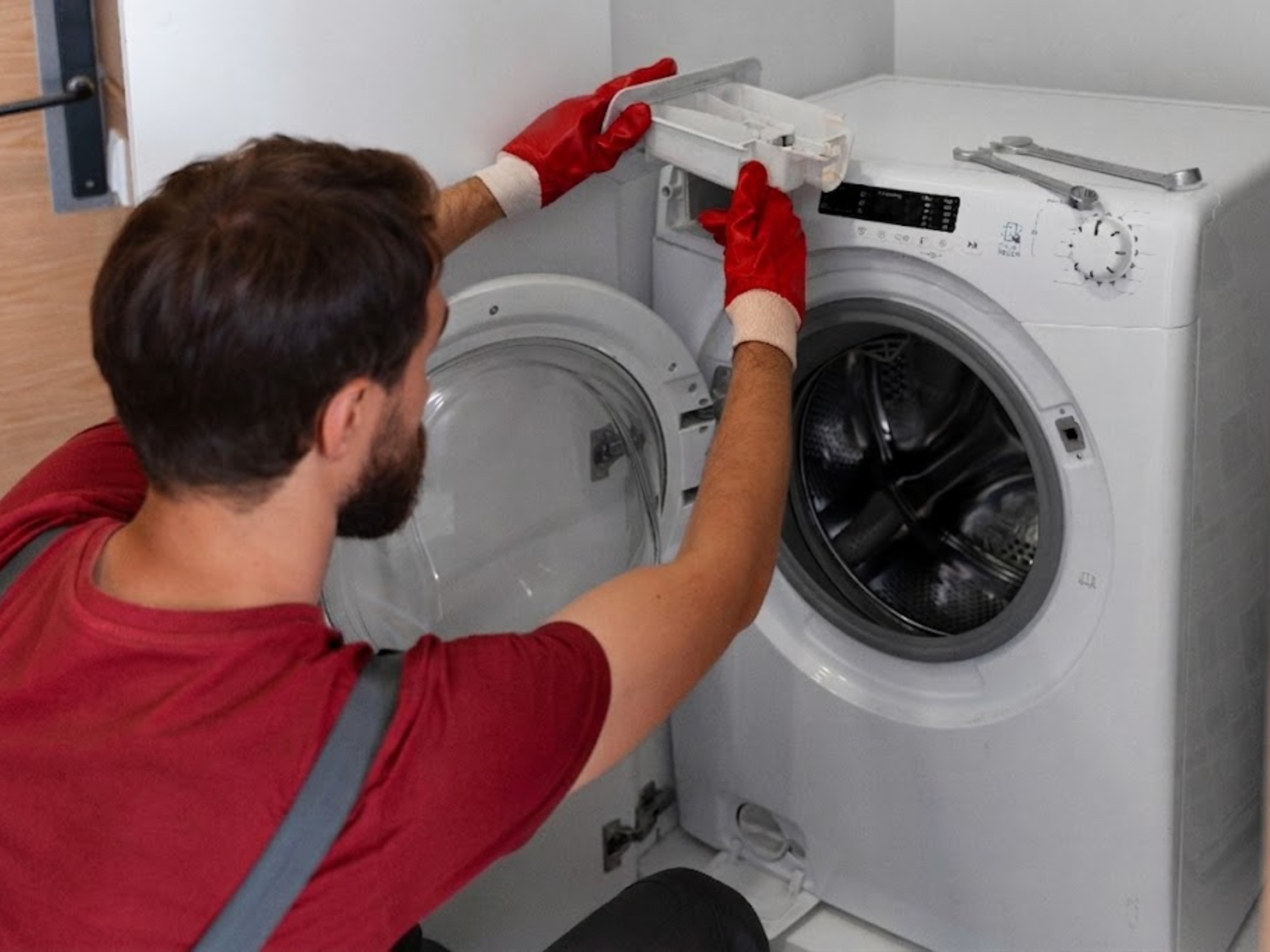
Cleaning the detergent and softener dispenser drawer monthly, removing it fully and rinsing with warm water, prevents this buildup from affecting dispenser function or contributing to internal odors.
Routine Maintenance Tasks That Extend Appliance Life
Monthly Drum Cleaning Cycle
Running a drum cleaning cycle once a month is the single most impactful routine maintenance task for a washing machine. Most modern machines have a dedicated drum clean or self-clean cycle that runs at high temperature without laundry.
Using a washing machine cleaner tablet or a cup of white vinegar in the drum (not the detergent drawer) during this cycle helps dissolve mineral deposits, clear detergent residue, and address the bacterial and mold growth that causes musty odors. In front-loaders, leaving the door ajar after each wash also helps the drum interior dry out and reduces mold growth on the door seal.
Inspecting and Cleaning the Pump Filter
Most front-loading washing machines have an accessible pump filter, usually located behind a small panel at the lower front of the machine, that catches lint, small items, and debris before they reach the drain pump. When this filter becomes clogged, it restricts drainage and puts stress on the pump motor.
Checking and cleaning this filter every one to three months is a straightforward task that most homeowners can perform without tools. A clogged pump filter is a common cause of drainage errors and slow-draining cycles, issues that are easily avoided with this simple maintenance step.
Checking Hoses for Wear and Connection Integrity
The inlet hoses that connect the washing machine to the household water supply are a common source of slow leaks and, in cases of hose failure, significant water damage. Rubber hoses typically have a recommended replacement interval of five years; braided stainless steel hoses last longer but should still be inspected annually for kinking, corrosion at fittings, or visible damage.
Checking that hose connections at both the wall and the machine are secure, and looking for any moisture near connections, takes a few minutes and can prevent a minor leak from becoming a water damage event.
Keeping the Machine Level
Washing machines that are not properly leveled vibrate excessively during the spin cycle. This vibration stresses the suspension system, can cause the machine to move over time, and creates noise that sometimes gets misattributed to a mechanical fault.
Most washing machines have adjustable leveling feet. Using a bubble level on the top of the machine and adjusting the feet until the machine is stable in all four corners is a setup step that’s worth revisiting periodically, particularly if the machine has been moved or if vibration has increased.
Recognizing When to Call a Professional
Symptoms That Warrant Early Attention
Some washing machine symptoms are worth addressing early rather than monitoring over time. Loud grinding or rumbling during spin, visible water pooling under or near the machine, error codes that recur after a reset, and cycles that stop mid-wash without completing are all signals that something in the machine’s system needs assessment.
Homeowners in Mission, KS who notice these symptoms can learn more about what professional washer repair services typically involve, including what a diagnostic visit covers and what the most common repair categories are.
Why Early Diagnosis Usually Means a Simpler Repair
Washing machine problems, like most appliance faults, tend to compound when left unaddressed. A drum bearing that’s beginning to wear produces noise for weeks or months before it fails completely, during which time the degraded bearing is also placing stress on the drum shaft and drum spider (the support structure behind the drum). By the time the bearing fully fails, it may have caused secondary damage that increases the repair scope.
Early diagnosis by a qualified technician typically results in identifying a problem at its least complex and least expensive stage. For Mission residents looking for locally available service, Appliance Shark’s Mission, KS appliance repair page provides an overview of what certified local service covers in this area.
Conclusion
Most costly washing machine repairs in Mission, KS are preceded by habits or overlooked maintenance that accelerated the underlying problem. Using the correct detergent in the right amount, loading the machine within its designed capacity, running monthly cleaning cycles, and inspecting hoses and filters on a regular schedule are the practical steps that make the most meaningful difference over the life of the appliance.
None of these steps requires specialized knowledge or significant time investment. What they require is consistency, treating the washing machine as a maintained appliance rather than a set-and-forget utility. When symptoms do appear despite good maintenance habits, addressing them early through a professional diagnostic is consistently the more cost-effective path compared to waiting until the problem becomes acute.
Want to Know If Your Washing Machine Needs Attention?
If you’ve noticed changes in how your washing machine sounds, drains, or completes cycles, or if you simply want a professional assessment of an older appliance before a problem develops, a diagnostic visit is a low-commitment way to get accurate information.
A qualified technician can inspect your machine, identify any developing issues, and give you a clear picture of its current condition and what, if anything, needs to be addressed. There’s no obligation involved in getting that information, and having it puts you in a much better position to make decisions about your appliance.
Schedule a diagnostic appointment with a certified washing machine repair technician serving Mission, KS and get a straightforward assessment of where things stand.